
Space to learn. Room to grow.
A place to work with classmates. A quieter spot to regroup. Space to move and try something new.
At The Craig School, the environment supports what students are learning throughout the day. Classrooms, shared spaces, and outdoor experiences give students opportunities to practice academic skills, build relationships, and become more independent.

A campus designed for your child.
This is not a repurposed traditional campus.
The school occupies a dedicated 14,000-square-foot second-floor space designed specifically for students in grades 3 through 8. From arrival to dismissal, the environment supports predictability and connection.
A warm and friendly reception area opens into learning zones rather than long corridors of closed doors.
Learning communities.
Our campus is organized around two learning communities, called Quads.
The North Quad serves grades 3-6. The South Quad serves grades 7-8.
Classrooms open onto shared common areas where students can connect with peers and participate in activities with staff support.


Classrooms with room to work.
Students need space for different kinds of learning.
Classroom layouts allow for direct instruction, small-group work, and individual practice. Staff can demonstrate a strategy, help students work through a task, and give them room to try it themselves.
A window into the school day.
Each classroom was designed with private observation spaces located between classrooms with tinted windows.
These rooms allow teaching teams, interns, parents and support staff a space to watch what is happening in a classroom without distracting the students. They are also used when outside observation is required for IEPs or district collaboration.

A place to gather
Shared spaces bring students together throughout the day
A space to reset
Quiet, comfortable areas give students a chance to regroup.
Room to move
Opportunities for movement help students stay balanced and engaged.

A place to gather.
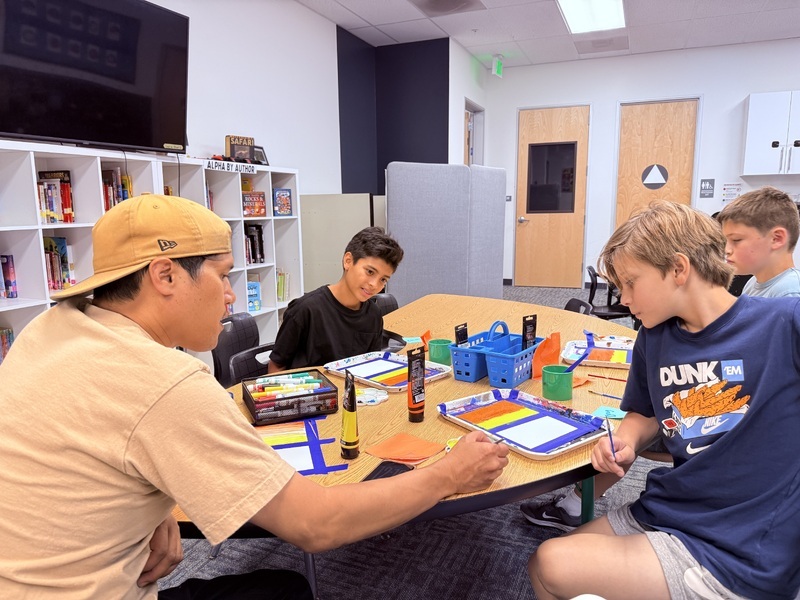
The multipurpose room brings students together for assemblies, art, games, and shared activities.
These experiences also create opportunities to practice joining in, collaborating, and working through disagreements with support.
A space to reset.
Sometimes a students needs less activity around them before they can return to learning.
Quiet reset spaces give students a place to regroup with staff support. Staff help students use the space and prepare to rejoin the classroom or activity.


Learning beyond the classroom.
The nearby San Diego Creek Trail gives students opportunities to observe, explore, and connect classroom learning with the world around them.
Outdoor experiences include walking-based exploration and Riding for Focus for eligible students in grades 5-8.
Students practice following a plan, noticing their surroundings, and participating with a group while spending time outdoors.
Experiential learning.
Students who earn Outride certification participate in guided bike rides along the trail and toward the Back Bay for science and social experiences. Bikes are stored onsite in a dedicated container that includes a small maintenance area donated through the Outride grant.
Younger students use the trail for walking-based science exploration and visits to nearby nature and bird sanctuaries.
Movement, nature, and learning are intentionally connected.


Every room. Every place. One goal.
The Craig School was designed to support the full student experience.
Clear structure. Thoughtful observation. Built-in regulation. Room to move. Space to reset. Access to nature. Ongoing learning for staff.
This campus does not ask students to adapt to learn.
It adapts to the students, enabling them to learn in a safe and supportive environment.
Questions families ask
Students belong to a homeroom community and receive instruction in groups appropriate to their learning needs.
A student's needs can differ by subject. Teachers use assessment information and classroom performance to guide instruction.
Contact admissions to discuss your child and the next steps. Parent visits are scheduled after the school reviews your child's documents.
The admissions team will explain what to share and help coordinate a visit.
Reset spaces provide a quieter setting when a student needs help regrouping.
Staff support their use and help the student prepare to return to learning. Families can discuss their child's regulation needs with the school during the admissions process.
Observations must be scheduled and approved in advance. Contact the school to discuss the purpose of the observation and any permissions needed.
Visit A Day at TCS for an overview of how academics, social learning, movement, and support fit together.
Current families can find practical information and school resources through the Current Families page.
Experience it for yourself.
The best way to understand a school is to see it. If you would like to learn more about how space, structure, and support come together here, we invite you to start a conversation with our admissions team.