Learning how to connect.
The skills around social engagement are critical to opening up the access to learning. Joining a conversation. Working through a disagreement. Asking for help when the words are hard to find. A student stuck in a social world they cannot navigate means their focus is on trying to fit in.
At The Craig School, students learn and practice these skills every day. Social Skills for grades 3-6 and Communications for grades 7-8 has a daily place on their school schedule, just like reading and math.
A class of its own.
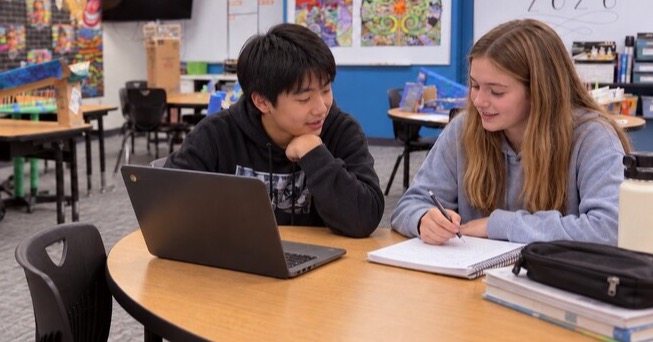
Social Skills and Communications each have a dedicated classroom.
Social Skills · Grades 3–6
Students learn to name feelings, manage reactions, build friendships, and work with others.
Communications · Grades 7–8
Students build on those skills through listening, understanding another point of view, working through conflict, and speaking up for what they need.
Knowing the words is a start.
It's one thing to talk about taking turns. It's another to wait when you have something you really want to say.
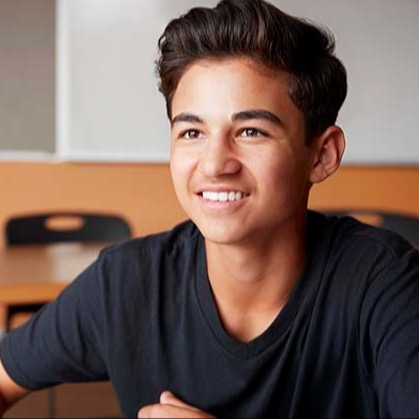
Teachers show students what a skill looks like and help them practice. That practice is reinforced during group work, lunch, and transitions.
Staff use shared language across the school day. Our 5:1 student-to-staff ratio gives students access to coaching while a situation is happening.
The goal is to help students connect with others while being themselves.
Parents hear about the day. Every day.
Students earn daily points for following directions, staying engaged, working well with others, and contributing to a positive school community.
These points become a daily color, shared with families on their student's Daily Progress Report. You can see how the day went without waiting for a conference.
One day is a snapshot. Patterns over time help us see what is getting easier and where support is still needed.

What social learning looks like when it starts to stick.
They Join.
They find a way into a conversation, game, or group.
They Listen.
They learn to make room for someone else's turn and ideas.
They Adjust.
They handle a change or disagreement by trying another way.
They Repair.
They take responsibility and make things right when necessary.
Could this be the right environment for your child?
Tell us about your child. We can talk about how social learning works here and what you hope will change.
Frequently asked questions
No. It is a required core class. Every student takes approximately one hour each day, and it carries the same weight as academic subjects.
Social Skills serves grades 3 through 6 and builds foundational social and emotional skills. Communications serves grades 7 through 8 and develops more advanced competencies, including communication, conflict resolution, and self-advocacy, specifically the skills students need to succeed in a traditional high school setting.
Students practice skills across classrooms, lunch, and transitions. Family Partnership helps families reinforce shared language at home. The aim is to help students use these skills in different settings, with progress and support needs varying by child.
See how social learning connects with executive function development and academics. Bring your questions to an admissions conversation.
It makes real-time coaching possible. With one staff member for every five students, a teacher or Program Coordinator can guide an interaction, reinforce a positive moment, or redirect a conflict while it is still unfolding. That immediate feedback is what builds durable habits.