Real academics. Ready when they are.
Your child is capable of learning and being challenged with grade-level work. Our innovative program is designed to remove the barriers that have stood in the way of achieving that goal.
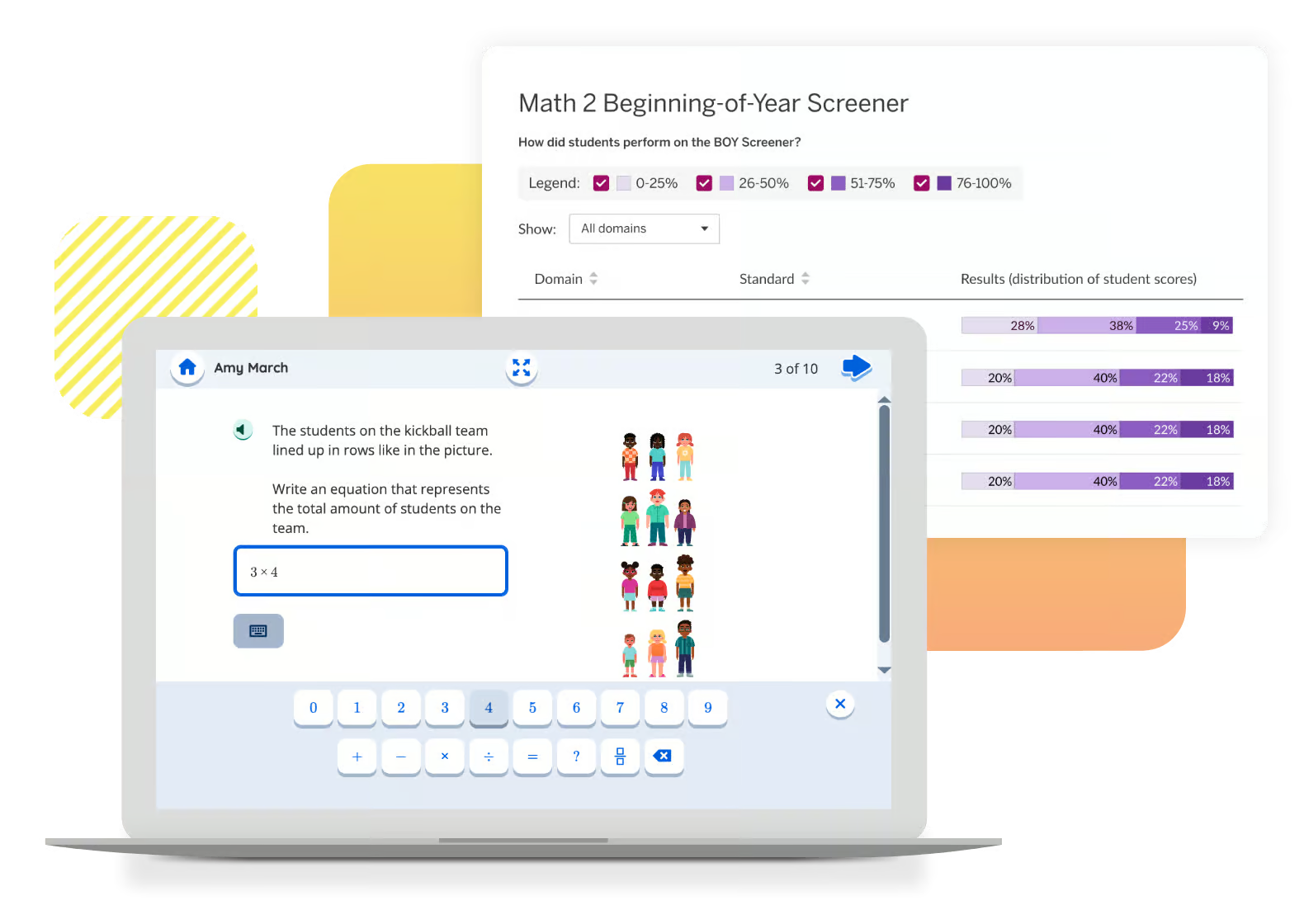
This year, TCS invested in the Amplify Learning curriculum suite. From engaging novel studies, hands-on science labs, and innovative ways to learn math concepts, Amplify delivers next-generation curriculum and assessments on an intuitive, integrated platform. Equipped with powerful tools to understand and respond to the needs of every student, Amplify and the TCS approach are a perfect match.

A curriculum with a clear path.
TCS uses the Amplify curriculum across English language arts, math and science, giving teachers and students a clear scope and sequence from one grade to the next.
|
English Language Arts
Amplify CKLA in grades 3–5. Amplify ELA in grades 6-8.
|
|
Mathematics
Amplify Desmos Math in grades 3–8.
|
|
Science
Amplify Science in grades 3–8.
|
Amplify Desmos Math CA and Amplify Science are California-adopted instructional materials. Amplify California Language Arts: CKLA and ELA is participating in California’s 2026 ELA/ELD instructional materials adoption process.
“Learning is about opening up to the environment.”
Capable students need an environment where they can engage with the work. Dr. Steve Hinshaw describes the connection between a supportive school environment, learning, and confidence.
Can a school offer support and high academic expectations?
A question we frequently get is "Can a school with this much support also have high academic expectations?" At TCS, the two are intertwined.
A student who can begin a task, organize the steps, ask for help, and recover from a mistake has greater access to instruction. Executive function and social-emotional support aren't alternatives to academics. They help make learning accessible.
The goal is to remove the barriers to learning. Then, to provide access to a top-tier curriculum and program.
The right instruction. Without the label.
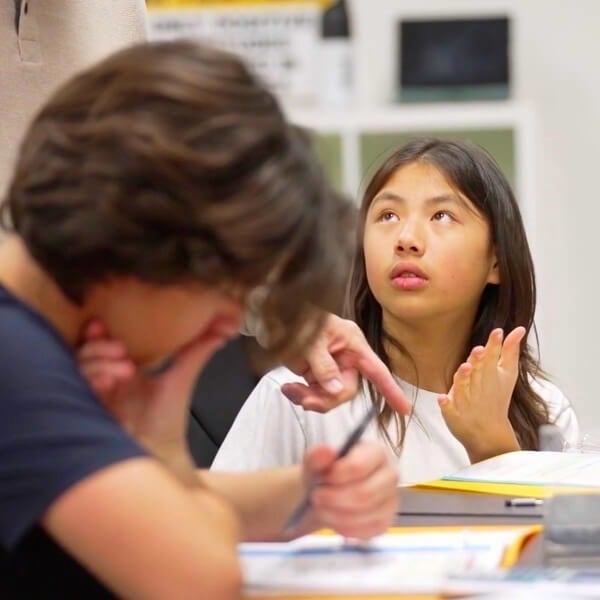
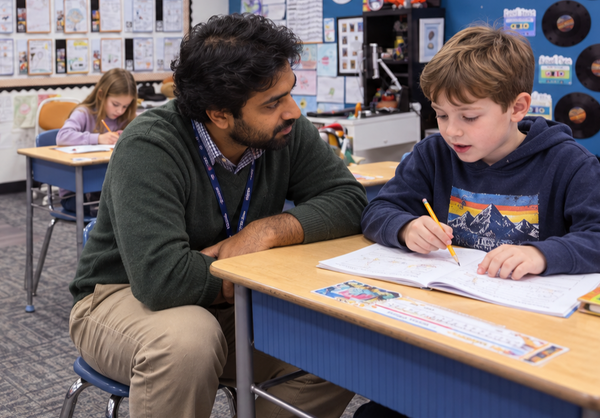
Students have a homeroom that serves as their home base, but math and English Language Arts instruction is organized into small groups based on instructional need. That means a student can receive more challenge in one subject and more support in another without either defining where they belong.
All students are assessed throughout the year using our mCLASS and aimswebPlus programs. This allows us to see where your student is, where they need additional support, and how they compare with national averages.
Homerooms span grades. Instruction doesn't.
Homerooms may include students from more than one grade, but our classes are not "combo" classes. Academic expectations do not get averaged across the room.
Students receive instruction based on their grade-level standards and instructional needs. Working with leveled small-groups, our teachers can provide appropriate challenge and support without expecting one lesson to work for every student in the room.


What academics look like here.
Top-tier curriculum
Students encounter grade-level standards and meaningful academic work.
Personalization
Small groups allow teachers to see where a student is succeeding and where they need more help.
Measuring Progress
Regular assessments give us evidence of growth and help guide what comes next.
All day support
Our approach is built into the school day so students have greater access to learning.
How we know it's working.
Assessment and measurement data isn't something we save for a report card. It's what connects our program and provides context to what a student needs next.
We use aimswebPlus, a nationally normed benchmark for reading and math, Amplify mCLASS DIBELS for language skills and reading in grades 3-5, and Amplify mCLASS Math for grades 3-8 math skills assessment.
Teachers look across assessment results, classroom performance, and what they observe each day to make instructional decisions.
See how executive function support, Social Skills and Communications, and Family Partnership connect with academic learning. When you are ready, explore the admissions process.
Come and see what learning looks like at TCS.
The best way to see the difference is to come and see our school day in action.