Clear Expectations, Shared Language
Students learn best when expectations are clear.
Across classrooms, we use shared language and predictable systems to reinforce:
- Following directions
- Staying engaged in tasks
- Managing frustration
- Communicating respectfully
- Working cooperatively
Expectations are explicit. Feedback is immediate. Growth is gradual and reinforced over time.
The Token Economy System
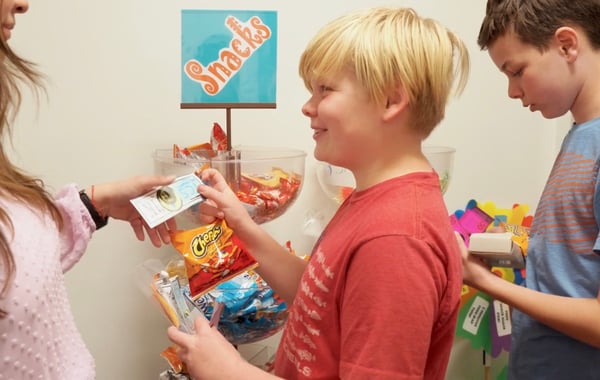
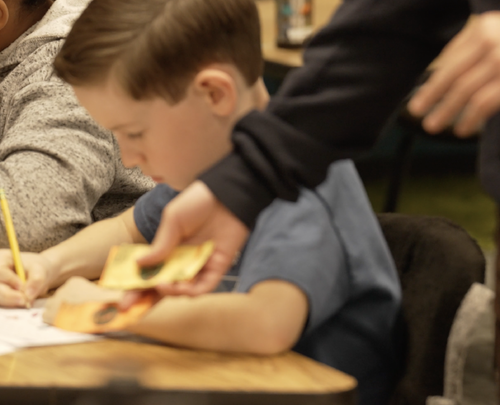
We use a structured token economy — a research-backed reward system with deep roots in ADHD behavioral science — to make expectations visible and give students immediate, consistent feedback on their progress.
Students earn points throughout the day for demonstrating targeted behaviors such as productivity, cooperation, and self-regulation. These points can be exchanged for structured privileges or activities.
This system:
- Makes expectations visible
- Provides immediate feedback
- Builds motivation through success
- Helps students connect effort with outcome
Over time, many students internalize these behaviors and rely less on external reinforcement.
Real-Time Support in the Classroom
Each classroom includes a credentialed teacher and two trained student support team members.
This staffing model allows students to receive support immediately when challenges arise without leaving the learning environment.
Support may include:
- Prompting and redirection
- Break planning
- Coaching through peer conflict
- Structured reset time
- Individual goal tracking
The goal is regulation within community.
Regulation Is Taught, Not Assumed
Many students arrive knowing they are “in trouble,” but not knowing what to do differently.
At TCS, students are explicitly taught:
- How to recognize early signs of frustration
- How to ask for a break appropriately
- How to repair after conflict
- How to reflect and try again
Evidence Informed. Always Student Centered
Behavioral goals are tracked using shared measures reviewed weekly by staff through SOL, our Science of Learning lab.
Data is used to:
- Identify patterns
- Adjust supports
- Measure progress over time

What This Means for Students
Over time, students build:
- Greater self-awareness
- Improved impulse control
- Stronger peer relationships
- Increased independence
- Confidence in their ability to succeed