
A school where your child doesn't have to adapt to an environment built for someone else.
The Craig School was built around the structure, predictability, and explicit instruction that students on the autism spectrum actually need. Not as an accommodation. As the foundation.
For students in grades 3–8 with ASD who are ready to learn in a structured small-group setting — this is what school was supposed to feel like.
No pressure. No commitment. Just a real conversation about your child. Now enrolling for 2026–27.

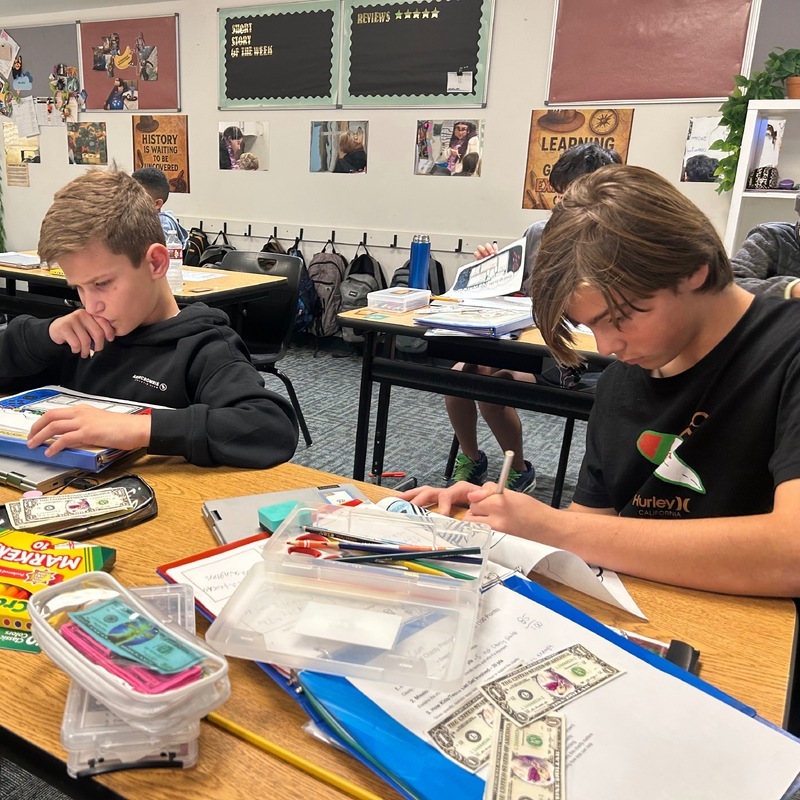
If your child has spent years in an environment that wasn't built for them, you'll recognize this.
Children on the spectrum often learn how to get by at school. They’re capable students, sometimes spectacularly so. But schools are built on expectations that don’t line up with how they perceive and experience the world.
For students with ASD, these things are not true. And when you put them into an environment that doesn’t understand that, the results aren’t surprising. They come home tired and frustrated. Stressed. Overstimulated. Unable to connect with the people around them.Unable to perform as they know they could.
Many of these students hold it together at school, at enormous cost, and fall apart at home. Many have learned to mask in ways that make their struggles invisible to teachers but invisible doesn't mean resolved.
Does this sound familiar?
- Bright, verbal, clearly capable but not performing the way their intelligence suggests they should
- Exhausted at the end of every school day in ways that feel disproportionate to what happened
- Social situations that feel unpredictable and draining, not because they don't want to connect, but because the rules are never made explicit
- A school environment that accommodates their needs on paper but still doesn't feel safe or predictable in practice
- Meltdowns, shutdowns, or anxiety spikes that are more about the environment than the child
- A recurring sense that they're "too much" for traditional school or conversely, that they're managing well enough that no one sees how hard they're working
Not adapted. Built. There's a difference.
Most schools adapt for students with ASD by adding supports... a quieter corner, extra transition warnings, a social skills pull-out group once a week. TCS didn't start with a traditional school and adapt it. TCS was designed from the beginning around the needs of students whose brains work differently. That distinction, architecture vs. accommodation, changes everything about what the school day feels like.Predictable Structure as the Foundation
Predictability Isn't a Concession. It's the Design.
5:1 Ratio
What It Means for ASD
For every 5 students, there is at least 1 staff member in the classroom.
Daily Social Skills Instruction. Built It.
Social Skills Instruction Every Day. Not Once a Week.
The Adults Don't Change
Genuine, Consistent Relationships with the Same Adults Each Day.
Is TCS the right fit for your child? Here's the honest answer.
TCS serves students on the autism spectrum who are ready to learn in a structured small-group setting which means students who can participate meaningfully in a classroom without requiring one-to-one support throughout the entire day.
That's the real qualifier. Not a DSM level. Not a label. Not whether your child has ever struggled in a traditional classroom, almost all of ours have. The question is whether a 5:1 structured environment is a setting where they can engage, learn, and grow.
For many students who have been told they need a "more restrictive" placement, or that they're "too much" for a group setting, the answer when they arrive at TCS is: they were never too much. The previous environments were too big, too unpredictable, and too loud. Five students and one teacher is a different story.
If you're unsure whether your child fits this profile, the answer is to have a conversation. We'd rather have that conversation and tell you honestly it isn't a match than have you wonder.
We want the right match for your child, not just a seat. If TCS isn't the right fit, we'll tell you and we'll do our best to help you find what is.
Learning doesn't stop at the classroom door
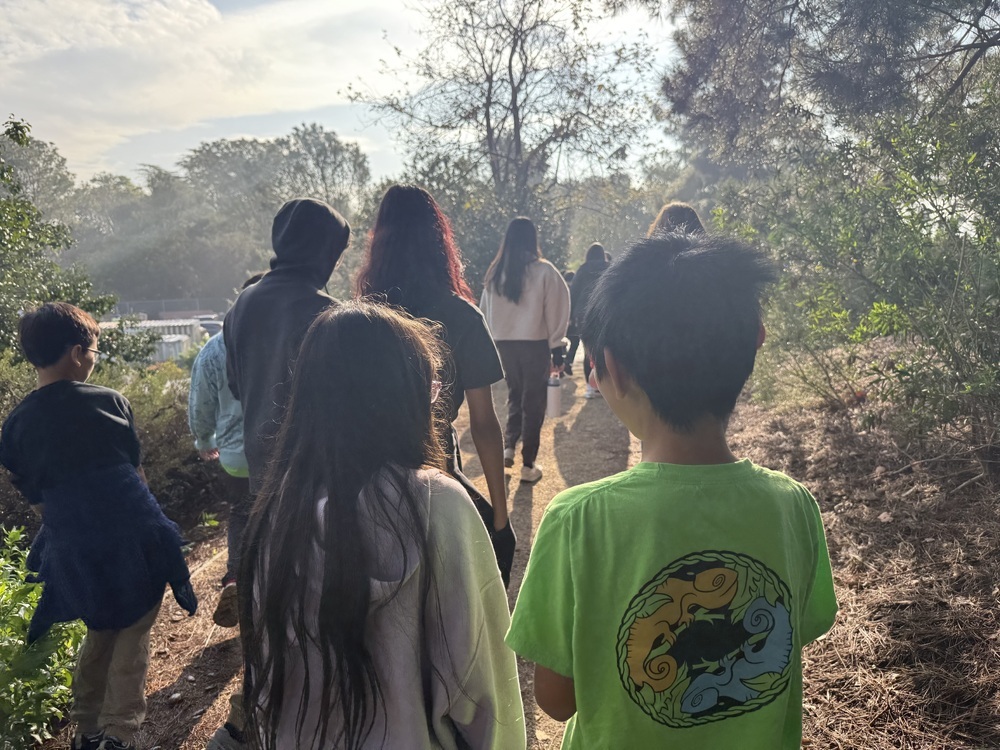
Every other week, TCS students ride or explore the San Diego Creek Trail, right outside our building. This is not recess.
Our outdoor enrichment program uses structured, intentional movement to reinforce the regulation, focus, and teamwork students are building in the classroom. For students with ASD, the outdoor environment, paired with clear structure and adult guidance, often provides a regulatory reset that changes the second half of the day. Movement, nature, and purposeful activity work differently for these students than sitting at a desk. TCS built a learning program around that reality.
TCS is attached to the San Diego Creek Trail and Irvine Wildlife Sanctuary.
It is intentional learning through movement.
"This school has given her confidence, academic growth, and a genuine sense of belonging."
Heather S. Miethe-Wong
TCS Parent
Student-to-Staff ratio in every classroom
Of UC Irvine research behind TCS model
Of TCS 8th graders successfully transition back to traditional school
The first step is just a conversation
Families of AuDHD students often come to us after navigating multiple professionals, multiple school placements, and a confusing mix of diagnoses that each explained part of the picture but none explained all of it. Our admissions process is a genuine conversation, not a screening. We want to understand the full picture of your child.
Tell us about your child
Fill out a short inquiry. It takes about three minutes. No formal application. No paperwork. Just the basics so we can have a real conversation.
We talk
An admissions conversation, not a test. You tell us what has and hasn't tell you honestly whether TCS is likely to be the right fit. No pressure in either direction.
Come see it
If there's a mutual sense of fit, we'll invite you and your child to visit the school. You'll see how the day flows. Your child will spend time in the classroom. We'll know more. So will you.
We move at your pace. No pressure.
"TCS didn't change who our son is. They gave him access to who he already was."
Erin Tyler
TCS Parent
Questions from families of ASD students
The right question isn't the level on a report. It's whether a structured small-group classroom is an environment where your child can engage. Many students who were placed in more restrictive settings, or who struggled significantly in a 30:1 classroom, function well in our 5:1 environment with predictable routines, consistent adults, and explicit social skills instruction. The structural differences are significant. If you're unsure, start with a conversation. We'll give you an honest assessment.
Social skills instruction at TCS is not a once-a-week pull-out group. It is woven into the daily school day, delivered in small groups, with consistent adults, using evidence-based approaches that make the unspoken social rules of peer interaction explicit. For ASD students who have spent years in environments where the social rules were never explained, this is often the most transformative part of TCS.
The small-group setting, consistent routines, and structured transitions create a significantly more manageable sensory environment than a traditional school. We are not a sensory integration therapy program but the environment itself is quieter, more predictable, and less overwhelming than most traditional classrooms. If your child has specific sensory needs, we'd want to understand those in detail during our admissions conversation.
Yes. And we'd add that we're aware of masking and its cost. Students who hold it together in traditional school settings at significant personal expense often find that the TCS environment requires less masking because the structure is predictable, the adults are consistent, and the social demands are made explicit rather than assumed. That doesn't mean students never struggle. But the baseline demands on regulation and social performance are different here.
No. A formal diagnosis is not required. Many students at TCS have ASD diagnoses; some have ADHD, executive functioning challenges, or anxiety without formal ASD documentation. We focus on functional fit and whether our environment is the right match for how your child learns and regulates. If your child presents with traits consistent with ASD and has struggled in traditional environments for related reasons, we'd welcome a conversation.
Yes. TCS is certified by the California Department of Education as a Nonpublic School. Families with an active IEP may be eligible for district-funded placement. Our admissions team can explain how this process works.
No. TCS serves students with ADHD, ASD, AuDHD, executive functioning challenges, and related learning profiles. Students with ASD make up a significant portion of the TCS student body. The environment, predictable structure, small groups, explicit social skills instruction, consistent adults, is designed to work well for this population as well as for students with ADHD and related profiles. The two groups often learn well together.
Looking for grade-specific information?
Every grade at TCS is different in terms of what your child will be working on academically, socially, and developmentally. If you'd like to see copy and information specific to your child's current grade, select below.Your child doesn't need to adapt to a school built for someone else.
TCS was built for them.
If you've spent years watching a capable child struggle in an environment that was never designed for them that's not a character flaw, a parenting failure, or an unfixable problem. It's a mismatch between a student and a system.
TCS is a different system. Built on research. Built around structure. Built for students on the autism spectrum who are ready to learn in a small, predictable, explicitly taught environment.
The first step is a short inquiry and a real conversation. No commitment. No pressure. Just an honest look at whether this is the right place for your child.
Tell us about your child.