AudHD • Grades 3-8 • Irvine, CA • ADHD + ASD • Executive Functioning

AudHD is both at once. Most schools are built for neither. TCS was built for both.

Students with AuDHD , ADHD and autism combined, face challenges that don't fit neatly into either category. The attention and regulation challenges of ADHD, layered on top of the sensory, social, and routine needs of ASD. TCS serves students in grades 3–8 with exactly this profile — in a small, structured environment built around how their brains actually work.

No pressure. No commitment. Just a real conversation about your child. Now enrolling for 2026–27.

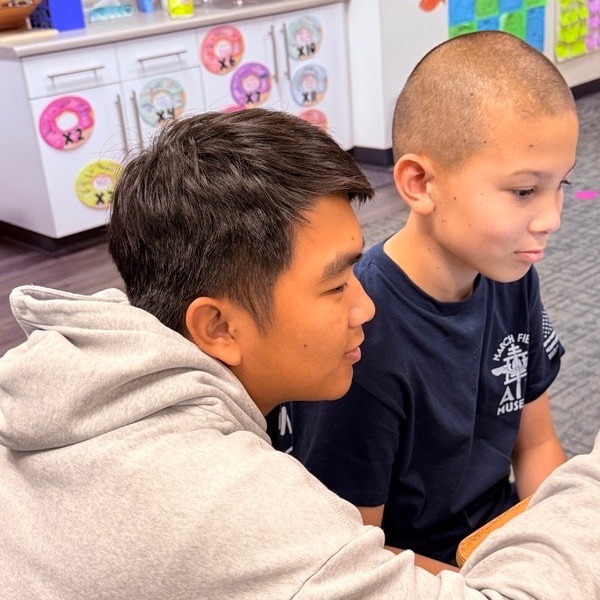
Junior High Students Working

If your child has been diagnosed with both ADHD and ASD, you've probably noticed that most schools are prepared for one or the other — not both at once.

AuDHD is not ADHD with some ASD features added. It is not ASD with some ADHD features added. It is both neurologies simultaneously and they interact in ways that create a profile that can look different from either alone.

The ADHD brings attention dysregulation, impulsivity, executive function challenges, and an inconsistent relationship with focus, sometimes scattered, sometimes hyperfocused on something the school doesn't consider important. The ASD brings the need for predictability, the difficulty with social rules that everyone else seems to have memorized, the sensory sensitivities, and the deep need for things to make sense in an explicit way.

What they combine to create is a student who simultaneously needs structure and struggles to stay within it. Who needs predictability and whose ADHD makes the day feel unpredictable from the inside even when it looks structured from the outside. Who wants connection and finds the social environment exhausting to navigate. Who has real capability and a profile that makes demonstrating that capability in a traditional classroom genuinely, structurally hard.

Does this describe your child?

  • A student who swings between being completely absorbed in something (hyperfocus) and unable to engage with anything
  • Who needs things to be predictable but whose ADHD means their internal experience of the day is chaotic even when the environment is calm
  • Whose social motivation is real, they want friends, they want connection, but the social landscape feels opaque in ways that lead to repeated misreads and social exhaustion
  • Who has genuine intellectual depth but can't always access it when the environment is demanding regulation, social performance, and focus simultaneously
  • Who has been in both ADHD support programs and ASD programs and fit neither perfectly... because they are neither, they are both
  • Who comes home from school depleted in a way that suggests the day cost more than it should have
AuDHD students don't need a school that handles one diagnosis and tolerates the other. They need a school built for both.

One environment. Both addressed. Not one tolerated for the sake of the other.

TCS was designed around students with ADHD, ASD, and executive functioning challenges,  which means it was designed with the understanding that many students have more than one. The same structural features that support ASD students, predictable routines, small groups, explicit instruction, consistent adults, are also the features that make the ADHD experience more manageable. The two profiles share more common ground in terms of what a good environment looks like than most people realize. TCS was built on that common ground.

Predictable Structure That Reduces the ADHD Tax

Structure That Reduces Cognitive Load for Both

5:1 Ratio
Room for Both Profiles

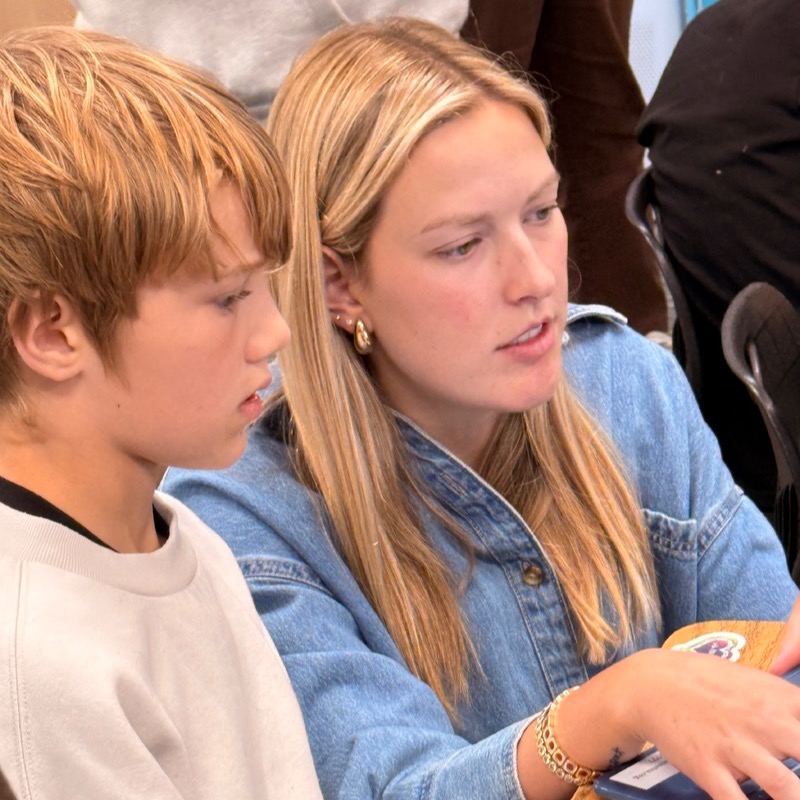
5 Students, 1 Staff Member. Both Profiles Held.

Explicit Social Skills for Both Profiles

Social Skills Instruction That Doesn't Assume Anything.

A Research Base That Includes Both

Built on 35 Years of UCI Research.

A word about hyperfocus and why it matters for how TCS is structured.

One of the most misunderstood features of AuDHD is hyperfocus: the capacity to become so deeply absorbed in something of intense personal interest that everything else disappears. Teachers often interpret it as defiance (the student clearly can focus when they want to), parents often experience it as maddening, and most schools have no idea what to do with it.

At TCS we recognize hyperfocus as something that falls under the profile, not a behavior/discipline issue, not a motivation issue, and certainly not something you can punish out of existence. The entire TCS environment is built with transitions that are clear, expectations that are explicit about when we switch gears and adults who know each child well enough to recognize the difference between true engagement and deep hiding. That doesn’t happen in a classroom of 30 students. You have to know the student.

Learning doesn't stop at the classroom door

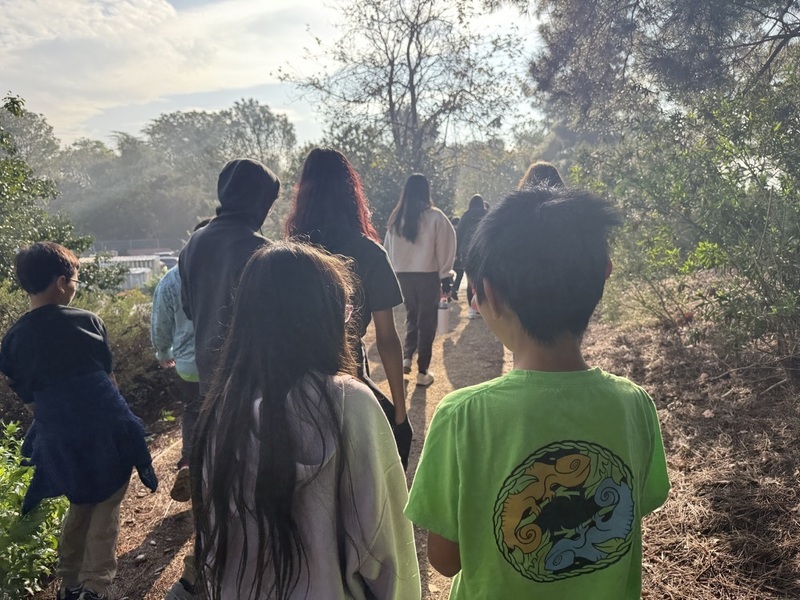
Every other week, TCS students ride or explore the San Diego Creek Trail, right outside our building.

For students with AuDHD, the Outride Program addresses both profiles simultaneously: the movement and regulation benefit that ADHD students need, in the structured, purposeful, adult-guided context that ASD students require. The outdoor environment is inherently less predictable than a classroom. Practicing regulation, focus, and teamwork in that context, with support, builds the skill of managing the less-structured environments these students will encounter for the rest of their lives.

TCS is attached to the San Diego Creek Trail and Irvine Wildlife Sanctuary.

This is not recess. It is intentional learning through movement.

Walking the San Diego Creek Trail

"This school has given her confidence, academic growth, and a genuine sense of belonging."

Heather S. Miethe-Wong

TCS Parent

5:1

Student-to-Staff ratio in every classroom


Daily

Social skills instruction


35 Years

Of UC Irvine research behind TCS model


93%

Of TCS 8th graders successfully transition back to traditional school

The first step is just a conversation

Families of AuDHD students often come to us after navigating multiple professionals, multiple school placements, and a confusing mix of diagnoses that each explained part of the picture but none explained all of it. Our admissions process is a genuine conversation, not a screening. We want to understand the full picture of your child.


Tell us about your child

Fill out a short inquiry. It takes about three minutes. No formal application. No paperwork. Just the basics so we can have a real conversation.

We talk

An admissions conversation, not a test. You tell us what has and hasn't   tell you honestly whether TCS is likely to be the right fit. No pressure in either direction.

Come see it

If there's a mutual sense of fit, we'll invite you and your child to visit the school. You'll see how the day flows. Your child will spend time in the classroom. We'll know more. So will you.

We move at your pace. No pressure.

"TCS didn't change who our son is. They gave him access to who he already was."

Erin Tyler

TCS Parent

Questions from families of AudHD students

My child has both ADHD and ASD diagnoses. Is TCS specifically designed for that combination?

TCS was built around the reality that many students carry both profiles and that the combined presentation creates specific challenges that need to be addressed simultaneously, not alternated between. The same structural features that support ASD regulation (predictable routines, small groups, consistent adults) also reduce the cognitive overhead of ADHD. The explicit social skills instruction addresses the social challenges that show up from both directions. TCS doesn't divide the student into their diagnoses. It serves the whole student.

My child's ASD is sometimes hard to see because the ADHD is more visible. Does that matter for fit?

Not at all. AuDHD presentation varies significantly, in some students the ADHD is the visible surface, with the ASD driving things underneath. In others it's reversed. What we focus on in admissions is the functional picture: how the student experiences the school environment, what makes it harder, what kind of structure and support changes things. We're not trying to verify a diagnosis. We're trying to understand a student.

Does a formal diagnosis of AuDHD (or separate ADHD and ASD diagnoses) exist? I've heard different things.

TThe DSM-5 does not list "AuDHD" as a single diagnosis. It is a community term for the co-occurring profile of ADHD and ASD. Many students carry both diagnoses separately. Some carry one and present with strong features of both. TCS does not require a specific diagnostic label for admission. We focus on the functional picture.

My child's IEP only mentions ADHD. Will TCS still consider them?

Yes. Admission is based on the fit between your child's learning profile and our environment, not on what's documented in any specific report. If your child has significant needs that aren't fully reflected in current documentation, we'd want to hear about that in our conversation.

Is TCS a nonpublic school (NPS)?

Yes. TCS is certified by the California Department of Education as a Nonpublic School. Families with an active IEP may be eligible for district-funded placement. Our admissions team can explain how this process works.

Looking for grade-specific information?

Every grade at TCS is different in terms of what your child will be working on academically, socially, and developmentally. If you'd like to see copy and information specific to your child's current grade, select below.

A school that handles both, because your child is both.

AuDHD students have a specific, real, documented profile. They are not students who couldn't make up their minds about which way to be neurodivergent. They are students with two simultaneous neurologies that interact in specific, predictable ways — and that require an environment designed with both in mind.

TCS is that environment. Small, structured, explicit, movement-integrated, research-based, and built on genuine understanding of the combined profile.

The first step is a short inquiry and a real conversation. No commitment. No pressure. Just an honest look at whether this is the right place for your child.

Tell us about your child.